

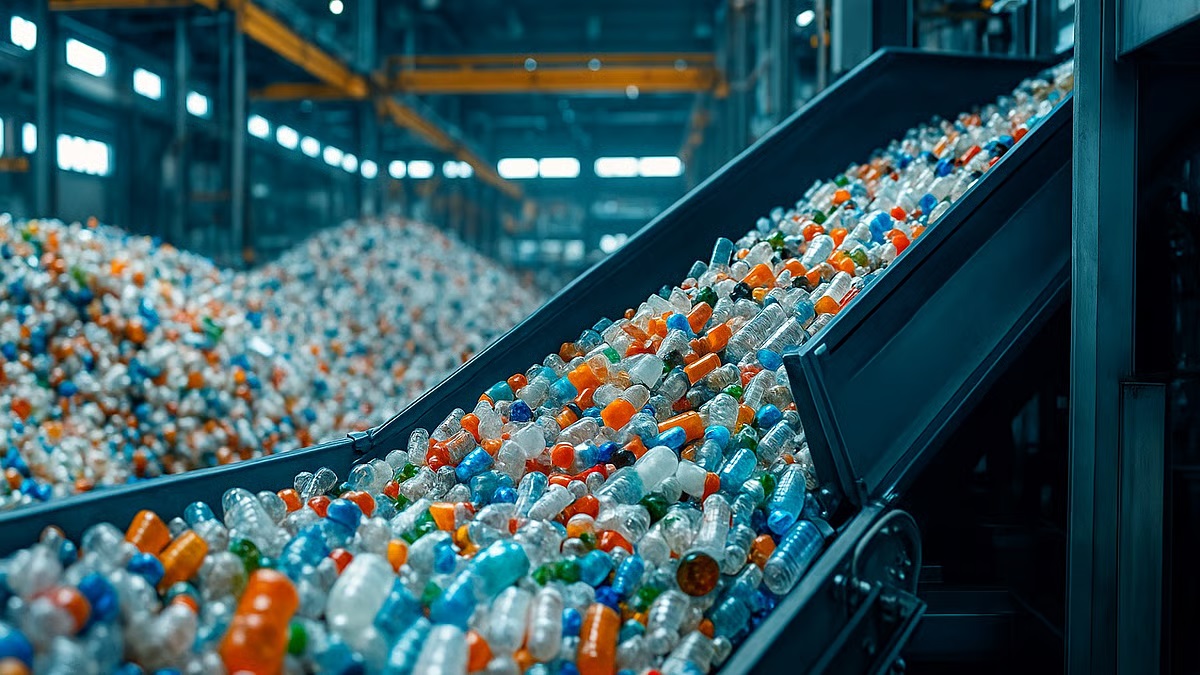
In the natural world, nothing goes to waste. Dead trees become habitat for insects, which feed birds, which fertilise the forest floor through their droppings, returning nutrients to living trees in an endless cycle. Human industrial systems, by contrast, have operated as linear processes: extraction, production, consumption, disposal. The challenge of e trash recycling presents an opportunity to align our technological metabolism more closely with the cyclical patterns that govern successful ecosystems, transforming what we discard into resources for continued productivity rather than allowing materials to accumulate as dead-end waste.
The Ecology of Electronic Waste
Electronic waste represents a peculiarly human phenomenon, absent from natural systems yet following principles that ecologists recognise. In any ecosystem, the accumulation of non-decomposable materials disrupts nutrient cycling and degrades habitat quality. Electronic devices, constructed from materials that resist natural decomposition, accumulate in similar fashion when disposal systems fail to process them effectively.
The scale commands attention. Global electronic waste generation exceeds 50 million tonnes annually, growing at approximately 4 per cent per year, a rate faster than human population growth. This acceleration reflects both increasing device ownership, particularly in developing nations, and shortening replacement cycles driven by technological advancement and planned obsolescence. The result resembles an invasive species overwhelming an ecosystem, except the invasion consists of our own discarded technology.
Material Concentrations and Recovery Potential
From an ecological perspective, electronic waste represents unusual material concentrations. In natural ore deposits, valuable elements exist in low concentrations: gold at parts per million, copper at single-digit percentages. Electronic devices contain these same elements in far higher concentrations, making them effectively above-ground mines of remarkable richness.
Consider the material composition of a typical computer:
- Approximately 2 kilogrammes of copper in wiring, connectors, and heat dissipation components, representing higher concentrations than most copper ore bodies
- 200 to 300 grammes of aluminium in casings and structural elements, already refined and requiring minimal energy for recycling
- Small but significant quantities of precious metals including 30 to 40 milligrammes of gold, 200 to 300 milligrammes of silver, and trace amounts of palladium and platinum
- Rare earth elements including neodymium in hard drive magnets, present in concentrations exceeding typical ore deposits
- Complex plastics engineered for specific properties, representing embodied energy and chemical processing
The evolutionary parallel proves instructive. Organisms that efficiently extract and utilise scarce resources possess competitive advantages. Societies that efficiently recover and reuse concentrated materials likewise enhance their adaptive fitness in resource-constrained environments.
The Metabolic Pathways of Recycling
Effective e trash recycling functions analogously to decomposition in natural ecosystems, breaking complex structures into constituent elements that re-enter productive cycles. Modern facilities achieve this through systematic processes that separate mixed materials into pure streams.
The recovery process follows distinct stages:
- Collection networks that intercept waste streams before materials disperse into landfills or informal processing operations
- Initial sorting separating equipment by type, as different categories require different processing approaches
- Dismantling operations removing hazardous components including batteries, mercury-containing backlights, and capacitors containing toxic materials
- Mechanical processing through shredding and separation technologies that sort materials by magnetic properties, electrical conductivity, and density
- Advanced recovery techniques including hydrometallurgical processing that dissolves circuit boards in chemical solutions, selectively precipitating valuable metals
The efficiency of material recovery determines the system’s ecological sustainability. Current best practices achieve recovery rates exceeding 90 per cent by weight, though further improvements remain possible through technological advancement and process optimisation.
Energetic Returns and Ecosystem Services
In ecological terms, e trash recycling provides multiple ecosystem services that benefit both human societies and natural systems. Primary production of metals from ore requires enormous energy inputs: mining operations, ore processing, smelting, and refining. Secondary production from recycled materials reduces these requirements dramatically.
The energy savings prove substantial:
- Aluminium recycling requires 95 per cent less energy than primary production from bauxite ore, equivalent to preventing approximately 9 tonnes of carbon dioxide emissions per tonne of recycled aluminium
- Copper recycling uses 85 per cent less energy than mining and refining virgin copper, whilst avoiding the extensive land disturbance associated with open-pit mining operations
- Precious metal recovery from electronic waste requires a fraction of the energy needed to extract equivalent quantities from increasingly lean ore deposits
These energy reductions translate directly to reduced greenhouse gas emissions, slower resource depletion, and decreased environmental disruption from mining activities. The cumulative effect resembles increasing ecosystem efficiency, accomplishing equivalent outcomes with reduced inputs.
Adaptive Strategies for Resource Management
Human societies face a fundamental choice about resource management strategies. Linear systems that treat materials as disposable work temporarily when resources appear abundant and waste sinks seem infinite. As populations grow and per capita consumption increases, neither assumption remains valid. The adaptive response involves transitioning toward cyclical systems that mimic natural ecosystems’ efficiency.
Singapore exemplifies this adaptation through systematic approaches to e trash recycling. Extended producer responsibility schemes create incentives for designing recyclable products. Convenient collection infrastructure reduces barriers to proper disposal. Licensed processing facilities ensure materials enter legitimate recovery pathways rather than informal operations that externalise environmental costs.
The broader principle applies universally: societies that develop effective mechanisms for recovering and reusing materials enhance their long-term viability. Those that continue linear consumption patterns accumulate waste whilst depleting resources, eventually confronting constraints that force adaptation under less favourable circumstances. The choice between proactive and reactive responses distinguishes successful adaptation from crisis management.
