

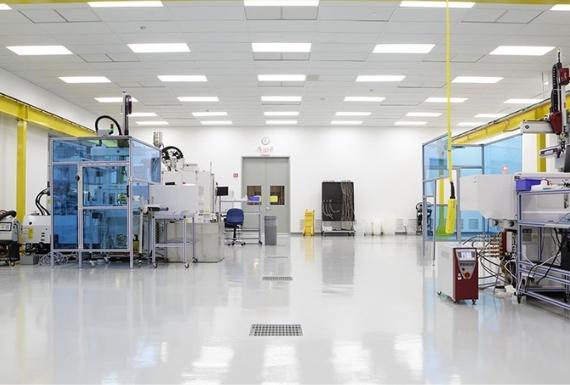
A clean room for medical devices represents one of modern healthcare’s most critical yet least visible safeguards, creating controlled environments where contamination becomes nearly impossible, and product safety reaches unprecedented levels. These sophisticated spaces operate according to principles that would astonish earlier generations of medical practitioners, who worked in conditions we would now consider primitive. The evolution from dimly lit surgical theatres to today’s pristine manufacturing environments reflects humanity’s growing understanding that invisible threats pose dangers as serious as those we can see.
Understanding Clean Room Classifications
The science governing a clean room for medical devices relies on precise measurement of airborne particles. International standards classify these spaces according to the maximum number of particles permitted per cubic metre of air. The classifications descend in a numerical hierarchy, with lower numbers indicating stricter control.
ISO Class 5 clean rooms, amongst the most stringent, permit no more than 3,520 particles of 0.5 micrometres or larger per cubic metre. To grasp this scale, consider that a human hair measures approximately 75 micrometres in diameter. The particles these rooms exclude are more than one hundred times smaller, invisible to the naked eye yet capable of compromising medical device sterility.
Singapore’s regulatory framework for clean rooms for medical devices aligns with these international standards, ensuring manufacturers meet stringent requirements before receiving approval to produce medical products within the city-state.
Essential Components of Clean Room Design
Creating a clean room for medical devices requires integrating multiple systems that work in concert to maintain environmental control. Each component serves a specific purpose in the larger mission of eliminating contamination risks.
The fundamental elements include:
- High-efficiency particulate air filters that capture 99.97 percent of particles larger than 0.3 micrometres
- Positive air pressure systems that prevent unfiltered air from entering through doors or gaps
- Specialised flooring and wall materials that resist particle generation and facilitate thorough cleaning
- Temperature and humidity controls maintaining optimal conditions for both products and personnel
- Sophisticated monitoring systems that continuously track environmental parameters
Air circulation patterns within a clean room for medical devices follow carefully designed flows. Filtered air enters from ceiling panels, sweeps downward across work surfaces, and exits through floor-level returns. This laminar flow prevents particles from settling on products or surfaces, carrying contaminants away before they can cause problems.
Personnel Protocols and Training
Human beings represent the greatest contamination threat within any clean room for medical devices. Our bodies continuously shed skin cells, hair, and microscopic debris. We carry bacteria and other microorganisms on our skin and in our respiratory systems. Every movement generates particles.
Consequently, personnel protocols form a cornerstone of clean room operations. Workers undergo extensive training before entering these controlled environments. The gowning process alone can take fifteen minutes, involving multiple layers of specialised garments donned in specific sequences.
A fully dressed clean room worker wears coveralls fabricated from non-shedding materials, shoe covers, head coverings, face masks, and often multiple pairs of gloves. Each item serves to contain the worker’s natural particle generation, creating a barrier between human biology and medical devices.
“Singapore maintains rigorous training standards for personnel working in clean room for medical devices,” according to industry guidelines, “requiring regular competency assessments and continuing education to ensure workers maintain proper protocols throughout their careers.”
Manufacturing Processes and Quality Control
Within a clean room for medical devices, manufacturing processes follow procedures designed to minimise contamination at every step. Materials enter through carefully controlled airlocks. Components undergo cleaning and sterilisation before assembly. Workers follow choreographed movements that reduce particle generation.
Quality control extends beyond the products themselves to encompass the environment. Particle counters sample air continuously, triggering alarms if contamination exceeds acceptable limits. Surface swabs verify the cleanliness of work areas. Environmental monitoring tracks temperature, humidity, and air pressure differentials.
Regular validation studies confirm that the clean room for medical devices maintains its designed performance characteristics. These studies involve deliberate contamination challenges, measuring how effectively the room’s systems eliminate introduced particles.
Economic and Strategic Considerations
Establishing a clean room for medical devices requires substantial capital investment. Construction costs significantly exceed conventional manufacturing spaces. Ongoing operational expenses include energy consumption for constant air filtration and conditioning, specialised cleaning supplies, and personnel training programmes.
Yet these costs pale compared to the consequences of contamination. A single compromised batch of medical devices can result in patient harm, regulatory sanctions, product recalls, and reputation damage. The clean room investment represents insurance against catastrophic failure, protecting both patients and manufacturers.
Singapore has attracted significant medical device manufacturing precisely because its infrastructure supports these demanding requirements. The nation’s stable climate reduces environmental control challenges. Reliable utilities ensure uninterrupted operations. A skilled workforce understands clean room protocols.
Future Developments and Innovations
Emerging technologies promise to enhance the clean room for medical devices even further. Ultraviolet light systems provide additional sterilisation capabilities. Robotics reduce human presence in the most critical areas. Advanced sensors detect contamination at ever-smaller scales.
Modular clean room designs enable faster construction and easier reconfiguration as product lines evolve. Improvements in filtration technology reduce energy consumption whilst maintaining or improving air quality. These advances make clean rooms more accessible to smaller manufacturers, democratising access to production capabilities once available only to large corporations.
Conclusion
The journey from concept to patient for medical devices passes through spaces where science, engineering, and human discipline converge in the service of safety. Every surgical implant, every diagnostic instrument, every therapeutic device used in modern healthcare bears the invisible mark of its origins in these controlled environments. As medical technology advances and devices grow more sophisticated, the fundamental requirement remains unchanged: products must be manufactured in conditions that eliminate contamination risks. This imperative ensures that clean room for medical devices will remain central to healthcare manufacturing for generations to come.
