

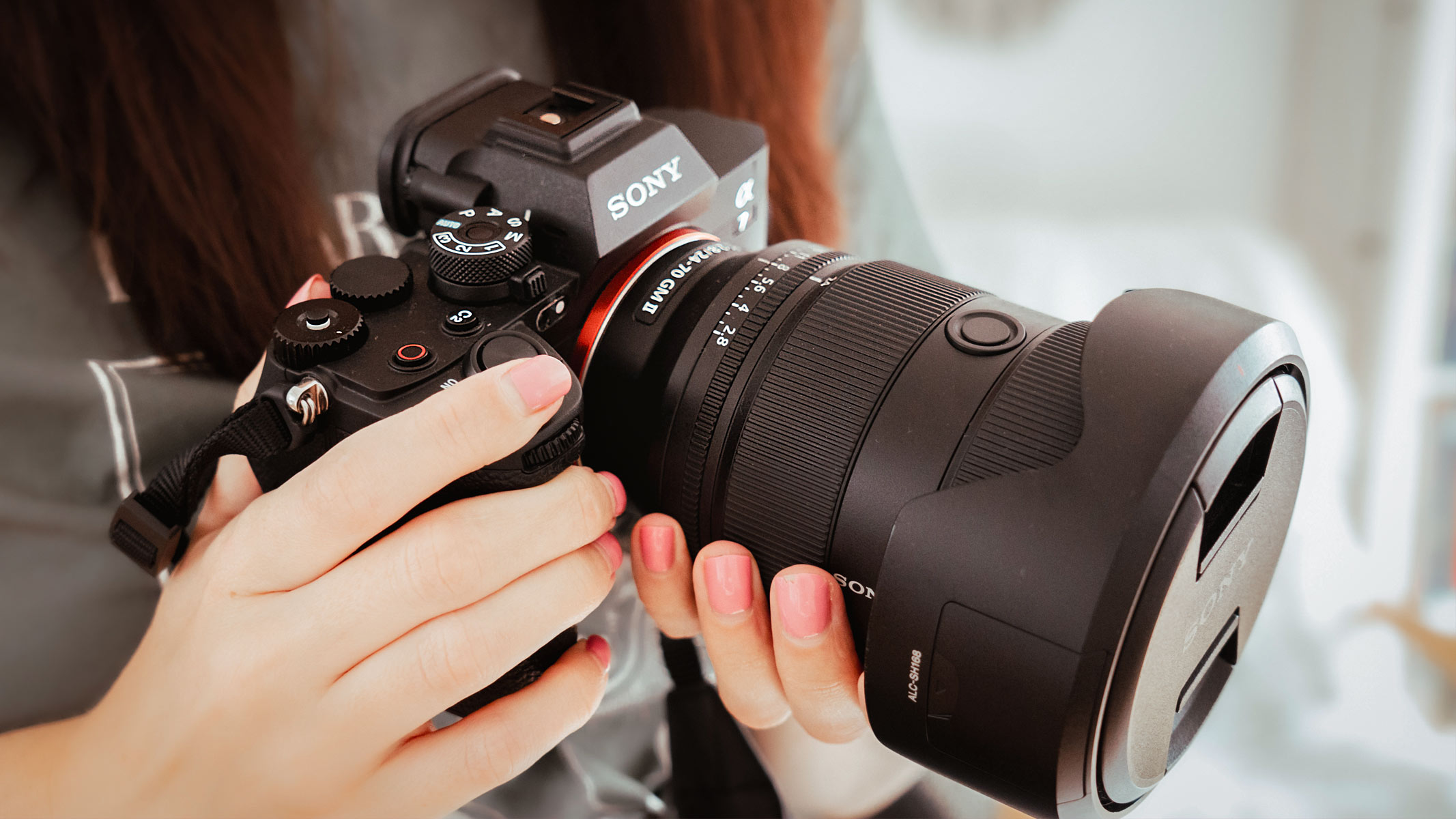
The Best Camera for Professional Photography depends heavily on what you shoot, but for most professional photographers, the Sony A7R V and Canon EOS R5 Mark II are among the strongest all-round bodies available today. Both offer exceptional resolution, reliable autofocus, and proven real-world performance across multiple shooting disciplines.
A wedding photographer and a wildlife photographer have almost opposite requirements. This guide breaks down the best camera by what you actually do.
Quick Comparison: Top Professional Cameras
| Camera | Sensor | Resolution | Best For | Body Price |
| Sony A7R V | Full frame BSI-CMOS | 61 MP | Studio, portrait, landscape, commercial | ~$3,900 |
| Canon EOS R5 Mark II | Full frame CMOS | 45 MP | Weddings, events, hybrid video/photo | ~$4,300 |
| Nikon Z8 | Full frame stacked CMOS | 45.7 MP | Wildlife, sports, versatility | ~$4,000 |
| Sony A9 III | Full frame global shutter | 24.6 MP | Sports, wildlife, fast action | ~$6,000 |
| Canon EOS R3 | Full frame stacked CMOS | 24.1 MP | Pro sports, photojournalism | ~$5,999 |
| Fujifilm GFX 100S II | Medium format | 102 MP | Commercial, fashion, fine art | ~$4,000 |
| Nikon Z9 | Full frame stacked CMOS | 45.7 MP | All-round pro workhorse | ~$5,500 |
For Wedding and Portrait Photography
Best pick: Canon EOS R5 Mark II
Wedding photographers need reliability above all else – you cannot reshoot a first kiss. The R5 Mark II delivers on every count: subject-tracking autofocus that locks on eyes across a crowded room, dual card slots for backup security, exceptional high-ISO performance for dark churches and reception halls, and 8K video when clients want cinematic edits.
The 45MP resolution handles tight crops without quality loss, which matters when shooting in venues where you can’t always get close. Canon’s color science for skin tones remains one of the best in the industry – wedding clients rarely complain about that.
Runner-up: Sony A7R V
Sony’s AI-based autofocus tracking is arguably more sophisticated than Canon’s at this point, and 61MP provides extreme cropping latitude. The tradeoff is a slightly steeper learning curve and a body that runs warmer during extended shooting.
For Wildlife and Sports Photography
Best pick: Nikon Z8 or Sony A9 III
Fast action needs fast cameras. The Nikon Z8 offers a 20fps burst rate with full resolution, blackout-free electronic viewfinder, and animal-recognition autofocus that is genuinely impressive in the field. At $4,000, it undercuts the Z9 while sharing most of its internals.
If budget allows, the Sony A9 III is the technical leader – the world’s first full-frame camera with a global shutter, which eliminates rolling shutter distortion entirely. At 120fps burst speed, it captures action that other cameras miss physically. For motorsport, birding, or Olympic-level sports coverage, it’s currently unmatched.
For Studio and Commercial Photography
Best pick: Sony A7R V or Fujifilm GFX 100S II
Studio work rewards resolution and dynamic range over speed. The Sony A7R V at 61MP produces files with extraordinary detail and excellent shadow recovery – critical for product photography where clients will zoom to 100% and examine every fiber.
If your clients need large-format prints, billboards, or fashion editorial work, the Fujifilm GFX 100S II at 102MP enters a different league entirely. Medium format produces a distinctive image quality – a depth and three-dimensionality in the tonal gradation – that’s hard to replicate with full frame, regardless of megapixels.
For Landscape and Architecture
Best pick: Sony A7R V
61 megapixels, 15+ stops of dynamic range, and exceptional weather sealing make the A7R V the landscape photographer’s workhorse. Pair it with a quality wide-angle prime and a good tripod, and you’re producing files that rival medium format for most practical purposes.
For Video-Hybrid Shooters
Best pick: Canon EOS R5 Mark II
The R5 Mark II shoots 8K RAW internally, 4K at 120fps for slow motion, and includes in-body image stabilization that makes handheld video genuinely usable. For photographers who also deliver video content – increasingly common for weddings, commercial work, and social media clients – this is the body that handles both without compromise.
Full Frame vs Crop Sensor for Professionals
| Factor | Full Frame | Crop Sensor (APS-C) |
| Low-light performance | Superior – larger pixels, better ISO | Acceptable; improving rapidly |
| Depth of field control | Easier to achieve shallow DOF | More depth of field at same aperture |
| Lens cost | Expensive glass required to match sensor quality | Lower cost lenses viable |
| Wildlife reach | Need longer lenses for reach | Crop factor works as effective reach multiplier |
| File size | Large – storage and processing costs | Smaller and faster to handle |
| Professional expectation | Standard for most pro markets | Accepted in many niches |
What Budget Gets You
| Price Range | What to Expect |
| $800-$1,500 (body) | Excellent APS-C cameras (Sony A6700, Fuji X-T5) – pros use these in specific contexts |
| $2,000-$3,000 (body) | Entry full frame (Sony A7 IV, Nikon Z6 III) – viable for most professional work |
| $3,500-$5,000 (body) | Top-tier full frame – no significant compromises for any genre |
| $5,000+ (body) | Specialist performance: global shutter, extreme speed, medium format quality |
The Most Important Thing Most Buyers Overlook
The lens matters more than the body. A $4,000 camera with a $200 kit lens will produce worse professional results than a $2,000 camera with a $1,500 prime lens. Optics determine sharpness, color rendering, bokeh quality, and flare resistance – things no camera body can compensate for.
Budget allocation for working professionals: 40% on bodies, 60% on glass. Bodies depreciate. Quality lenses hold value for decades and transfer between generations of the same mount.
Final Recommendation by Specialty
| Specialty | Top Pick | Why |
| Weddings & events | Canon EOS R5 Mark II | Reliability, skin tone rendering, dual card slots |
| Wildlife & sports | Nikon Z8 | Speed, tracking, value at $4K price point |
| Studio / commercial | Sony A7R V | 61MP resolution, dynamic range, AF precision |
| Landscape | Sony A7R V | Resolution + dynamic range for large prints |
| Video-hybrid | Canon EOS R5 Mark II | 8K RAW, IBIS, proven video reliability |
| Fashion / fine art | Fujifilm GFX 100S II | 102MP medium format, tonal quality |
