

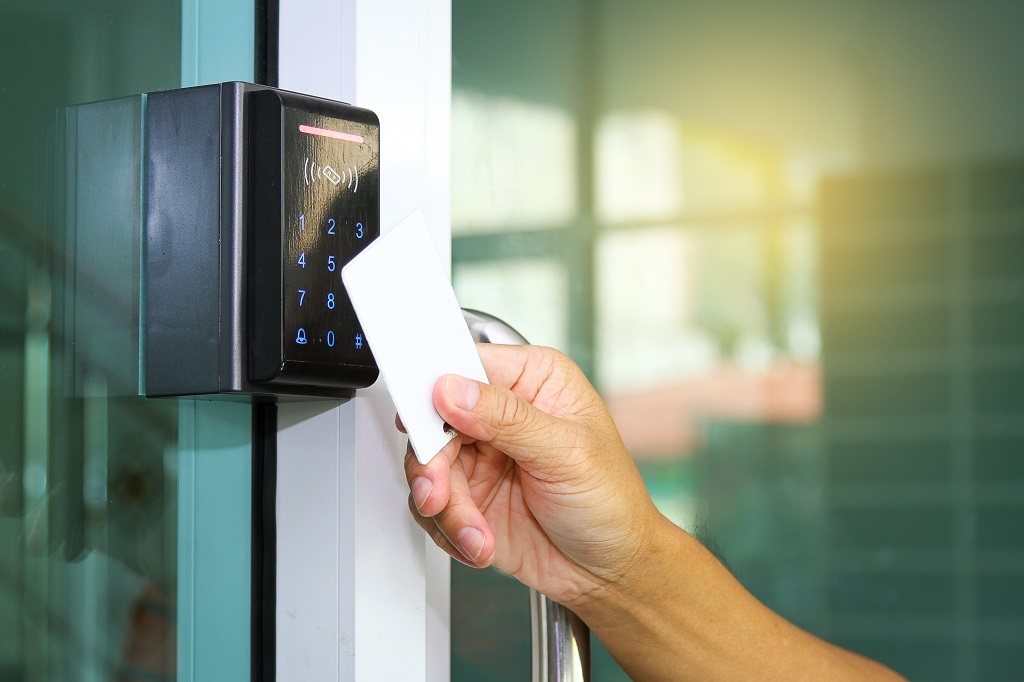
Choosing the right security system for your doors can be tricky. One key component of these systems is the access control reader. Access control readers, installed on doorways or entry points, help manage who gets in and out.
Read on to discover the best type of reader for your needs—your solution is just ahead.
Types of Access Control Readers
Access control readers include card, keypad, multi-factor authentication, biometric, proximity, and mobile options. Each type caters to different security needs and preferences.
Card Readers
Card readers play a crucial role in door access control systems, efficiently managing entry to buildings or specific areas. They come in two primary varieties: proximity and magnetic.
Proximity card readers allow entry by recognizing a signal from a proximity card or key fob without needing physical contact, making them a convenient choice for fast-paced environments.
On the other hand, magnetic card readers require the card to be swiped through the reader, similar to using a credit card machine. Both types are integral components of security systems, providing an easy-to-use and cost-effective solution for controlling access.
These devices serve as pivotal points for ensuring that only authorized personnel can enter secured zones. By utilizing either RFID technology in proximity models or magnetic stripes on cards for swiping through magnetic readers, businesses safeguard their premises against unauthorized access.
The adaptability of card readers allows them to integrate seamlessly with other security systems within an organization’s infrastructure, enhancing overall security protocols and procedures.
This integration is vital for creating comprehensive protective measures around sensitive information or valuable assets housed within various facilities.
Keypad Readers
Keypad readers, also known as access control keypads, require users to input a unique PIN or passcode to gain entry. These readers offer an additional layer of security and are suitable for areas where restricting unauthorized access is crucial.
The advantage of keypad readers lies in their ability to be easily shared among authorized individuals while still maintaining security through the use of personalized codes. However, it’s important to ensure that the chosen PINs are not easily guessed or disclosed, emphasizing the need for meticulous consideration when implementing this type of access control system.
Furthermore, keypad readers can be seamlessly integrated into existing door access control systems, offering tailored solutions for businesses and organizations seeking enhanced security measures.
Their cost-effective nature and simple operation make them a popular choice across various industries, providing a versatile option for those prioritizing both security and convenience in their access control strategies.
Multi-Factor Authentication Readers
Multi-Factor Authentication Readers, also known as MFA readers, provide a high level of security by requiring multiple forms of authentication for access. These readers can combine different factors such as something the user knows (like a password or PIN), something the user has (like an access card or key fob), and something the user is (like a fingerprint or retina scan).
By incorporating multiple layers of verification, MFA readers significantly enhance access control system security and reduce the risk of unauthorized entry.
MFA readers are increasingly popular in industries where stringent security measures are critical, such as government facilities, data centers, financial institutions, and healthcare organizations.
The use of multiple authentication factors makes it exponentially more difficult for unauthorized individuals to gain access to sensitive areas. This type of reader offers robust protection against unauthorized entry and enhances overall security levels within an organization’s premises.
Biometric Readers
Biometric readers are a type of access control reader that uses unique physical characteristics for authentication, such as fingerprints or retinal scans. These readers offer the highest level of security among all access control readers and are widely considered to be the most secure option available.
While they may have a higher initial cost compared to other types of access control readers, biometric readers provide an unparalleled level of protection for sensitive areas and valuable assets.
Proximity Readers
Proximity readers are a type of door access control reader that uses proximity cards or key fobs to grant access. These readers are popular due to their convenience, allowing users to gain entry by simply waving the card or fob in front of the reader.
However, it’s important to note that proximity readers can be vulnerable to cloning, where unauthorized individuals create duplicate cards or fobs for illicit access. Therefore, ensuring adequate security measures and proper management of proximity cards is essential in maintaining the integrity of the access control system.
Additionally, companies offering door access control systems may provide a range of products and services tailored towards different businesses’ needs. It’s crucial for organizations to weigh the benefits and potential vulnerabilities associated with proximity readers when considering them as part of their overall door security strategy.
Mobile Readers
Mobile readers are becoming increasingly popular in door access control systems, offering convenience and flexibility for users. These readers often require additional hardware, such as smartphones or mobile devices, to grant access.
By utilizing RFID or Bluetooth technology, mobile readers provide a seamless and contactless way for authorized individuals to gain entry. They are designed to enhance the user experience and can be integrated with other security systems to provide a tailored approach towards securing buildings and areas.
Electronic locks combined with mobile readers offer an advanced level of security while catering to the ever-evolving demands of modern access control systems. Companies specializing in door access control solutions offer a range of products and services that include mobile reader options, allowing businesses and organizations to choose the right system based on their specific needs.
Key Benefits & Considerations of Each Type
Card Readers: Allows for easy entry and is cost-effective.
Keypad Readers: Requires memorization and can be shared among users.
Multi-Factor Authentication Readers: Offers a high level of security.
Biometric Readers: Provides the highest level of security, but may come with higher costs.
Proximity Readers: Convenient to use, but vulnerable to cloning.
Mobile Readers: Increasing in popularity, although may require additional hardware.
Card Readers: easy to use, cost-effective
Card readers are simple and convenient for users as they require minimal training. They are also cost-effective, making them a popular choice for many businesses and organizations.
These systems use electronic card readers with key fobs to grant access, providing a straightforward solution for managing entry to buildings and restricted areas. With advancements in technology, card readers continue to be reliable and adaptable entry devices for door access control systems.
Access control companies offer a range of card reader options tailored towards different security needs, from basic to advanced capabilities. The ease of use and affordability make card readers an appealing choice for those seeking an effective yet budget-friendly access control solution.
Keypad Readers: require memorization, can be shared
Keypad readers are a type of access control reader that necessitates users to memorize a numeric code for entry. This feature allows the keypad readers to be shared among multiple individuals who have been given the code, while also requiring them to remember and safeguard the code.
While this can provide convenience and accessibility in certain situations, it’s important to consider the security implications of sharing access codes for keypad readers. Businesses must assess whether this method aligns with their security requirements and policies before implementing keypad readers as part of their door access control systems.
Access codes used with keypad readers should be changed regularly to maintain security. Organizations need to educate users on best practices for creating and protecting access codes that are both easy to remember yet challenging for unauthorized individuals to guess or obtain.
The active management of user access codes is essential in ensuring that keypad readers provide an effective balance between convenience and security within an organization’s door access control system.
Multi-Factor Authentication Readers: high level of security
Multi-factor authentication readers provide a high level of security by requiring multiple forms of verification for access. This can include a combination of something the user knows, like a PIN or password, with something they have, such as an access card or key fob.
Some systems may also incorporate biometric data, like fingerprints or retinal scans, to further enhance security. These readers are increasingly popular in businesses and organizations where advanced security measures are essential to protecting sensitive areas and assets.
It’s important to note that multi-factor authentication readers offer a robust defense against unauthorized access attempts. By incorporating multiple layers of verification, these systems significantly reduce the risk of security breaches and ensure that only authorized personnel can gain entry.
Biometric Readers: most secure, but may have a higher cost
Biometric readers, such as fingerprint or retinal scanners, offer the highest level of security in access control systems. They provide a reliable way to verify an individual’s identity based on unique physical characteristics, making it nearly impossible for unauthorized individuals to gain access.
However, due to the sophisticated technology involved in biometric readers, they may come with a higher cost compared to other types of access control readers. These advanced devices use distinct biological attributes for authentication and are considered highly secure options for businesses and organizations seeking maximum protection for their premises.
Access control providers offer various biometric reader options tailored to different security needs and environments. For instance, some biometric readers incorporate multi-factor authentication capabilities along with biometric verification for enhanced security measures.
Despite the potential higher cost associated with biometric readers, many businesses find the unparalleled security they offer well worth the investment when safeguarding sensitive areas and valuable assets against unauthorized access attempts.
Proximity Readers: convenient, but can be vulnerable to cloning
Proximity readers are a convenient type of door access control reader that utilizes proximity cards or key fobs to grant access. However, they can be vulnerable to cloning, posing security risks for access control systems.
Organizations should weigh the convenience of proximity readers against their susceptibility to unauthorized duplication when selecting door access control solutions.
The vulnerability of proximity readers to cloning highlights the importance of considering the level of security and potential risks associated with different types of door access control readers.
In assessing options for an access control system, businesses should carefully evaluate the trade-offs between convenience and security to ensure the protection of their premises and assets.
Mobile Readers: increasing popularity, may require additional hardware
Mobile readers are gaining popularity as a convenient access control solution. However, they may need additional hardware to function effectively in some cases. With the increase in smartphone use, mobile readers offer the flexibility and convenience of using smartphones for access control.
Integrating mobile readers into an access control system can provide added security features and authentication options, making them an attractive choice for businesses seeking modern solutions to their security needs.
Conclusion
Understanding the various types of door access control readers is crucial for choosing the right system. Whether you opt for card readers, keypad readers, or biometric readers, each type offers unique benefits and considerations.
Being mindful of security levels and integration with other systems is key when selecting a door access control reader. Different businesses have different needs, and it’s essential to find a system that aligns with your specific requirements.
